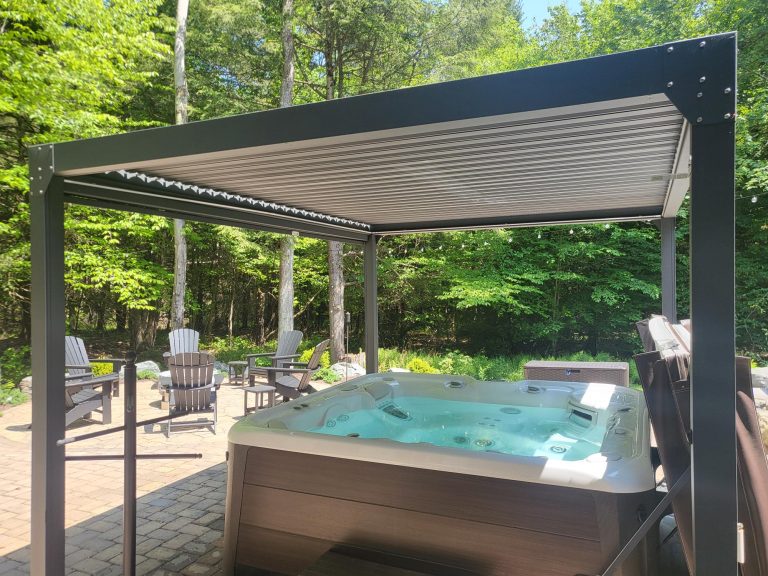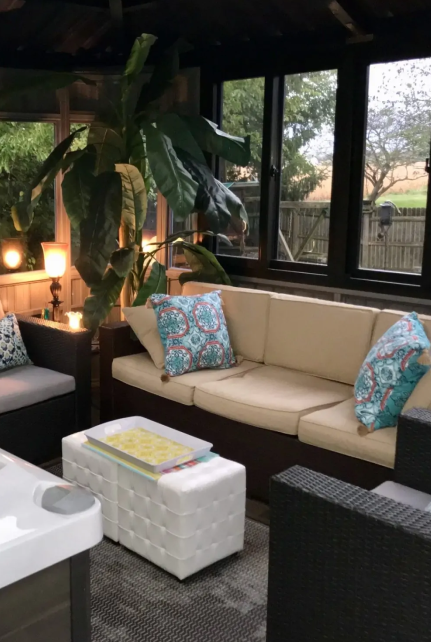
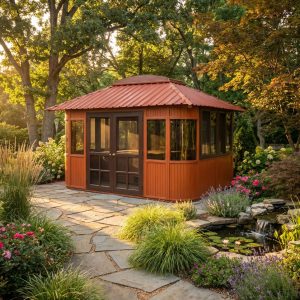
 Cedar and composite are the two materials most people weigh when they’re shopping for a hot tub gazebo — and on day one, they can look almost identical. The real difference shows up over the years: in how much work the structure demands, how it handles the constant moisture of a spa, and how good it still looks a decade later.
This guide breaks down composite vs. cedar across the things that actually matter — maintenance, durability, appearance, cost over time, and climate — so you can choose the gazebo you’ll still love long after the new-build glow wears off.
The short answer
If you want the natural look and smell of real wood and you don’t mind re-sealing it every year or two, cedar is a beautiful choice. If you want a structure that looks like wood but stays looking new for decades with essentially zero maintenance — especially around the heat and humidity of a hot tub — composite wins. For a structure that lives over a steaming spa year-round, composite’s moisture resistance is hard to beat.
| Cedar | Composite (Ultrawood™) | |
|---|---|---|
| Maintenance | Re-stain/seal every 1–3 yrs | None — no staining, sealing, or painting |
| Lifespan | ~15–25 yrs with upkeep | 25–50 yrs |
| Color over time | Greys/fades; needs refinishing | Built-in colour; resists fading |
| Moisture & rot | Can rot, crack, warp near a spa | Won’t rot, swell, or splinter |
| Insects | Some natural resistance | Fully insect-proof |
| Upfront cost | Lower | Higher |
| Lifetime cost | Higher (materials + labour for upkeep) | Lower (no ongoing costs) |
| Best for | Wood purists who enjoy upkeep | Hands-off owners; wet/snowy climates |
What is a cedar hot tub gazebo?
Western red cedar is the classic choice for outdoor structures, and for good reason. It’s genuinely beautiful, it carries that unmistakable cedar aroma, and it has some natural resistance to rot and insects thanks to its oils.
Where cedar shines:
- Warm, natural wood grain and scent
- Lightweight and easy to work with
- Renewable, natural material
Where cedar struggles around a hot tub:
- It needs regular upkeep. To keep its colour and protect it from the elements, cedar should be cleaned and re-stained or re-sealed roughly every 1–3 years. Skip it and the wood weathers to grey.
- Moisture is its enemy. A hot tub throws off heat and humidity constantly. Over time that steam, plus rain and snow, can cause cedar to crack, cup, warp, or rot — especially at joints and ground contact.
- The natural resistance fades. Cedar’s protective oils diminish as the wood ages, so older cedar becomes more vulnerable, not less.
In other words, cedar can look stunning — but a hot tub is one of the harshest environments you can put it in, and keeping it looking its best is an ongoing commitment.
What is a composite hot tub gazebo?
A composite gazebo is built from engineered material — at Westview, that’s our Ultrawood™ composite — that combines the look of real wood with the durability of modern materials. The colour is built into the material rather than sitting on top as a stain or paint.
Where composite shines:
- Zero maintenance. No staining, no sealing, no painting — ever. An occasional rinse is all it asks.
- Moisture-proof. It won’t absorb water, so it won’t rot, swell, or splinter in the humid environment around a spa.
- Holds its colour. Because the colour runs through the material, it resists the fading and greying that wood suffers.
- Dimensionally stable. It resists the warping and cracking that come from constant wet-dry, hot-cold cycles.
- Insect-proof and consistent, board to board.
The trade-offs:
- Higher upfront cost than cedar (though, as we’ll see, often a lower lifetime cost).
- Wood purists may miss the smell and the slight imperfection of natural grain, though quality composite mimics real wood grain closely.
Head-to-head: the five things that decide it
1. Maintenance — the biggest difference
This is where the two materials separate the most. Cedar is a commitment. Plan on cleaning and re-applying stain or sealant every couple of years to keep it protected and good-looking — that’s either your weekends or a contractor’s invoice, for the life of the structure.
Composite asks for almost nothing. No sanding, no staining, no sealing. If you’d rather spend your weekends in the hot tub than maintaining the thing around it, composite is the obvious pick.
2. Durability and lifespan
Around a hot tub, the constant cycle of heat, steam, cold, and moisture is brutal on natural wood. Cedar can last a long time, but only with diligent upkeep — neglect it and rot or cracking can shorten its life considerably.
Composite is engineered for exactly this environment. It doesn’t absorb moisture, so the spa’s humidity simply doesn’t affect it the way it does wood. A quality composite hot tub gazebo can last decades with no decline in structure or appearance.
3. Appearance over the years
New cedar is gorgeous. The catch is new. Left untreated, cedar weathers to silvery grey within a season or two; to keep its warm tone, you’ll be refinishing it on a schedule.
Composite’s colour is integral and UV-stable, so the gazebo you install looks essentially the same in year ten as it did on day one — no refinishing required.
4. Cost: upfront vs. lifetime
Cedar usually wins the sticker price. But the honest comparison is the total cost of ownership. Add up years of stain, sealant, cleaning supplies, and either your time or a pro’s labour, and cedar’s lower starting price narrows — and often disappears.
Composite costs more upfront and then essentially nothing after. Over the life of the structure, the maintenance-free option frequently comes out cheaper and saves you the hassle. (For real numbers on both, see our hot tub enclosure cost guide.)
5. Climate
The wetter, snowier, or more humid your climate, the more composite pulls ahead. Heavy rain, freeze-thaw cycles, and coastal humidity all accelerate wear on cedar. Composite’s moisture and dimensional stability make it the safer long-term bet anywhere weather is a factor — which, near a hot tub, is everywhere.
So which should you choose?
- Choose cedar if you specifically want natural wood — the grain, the scent, the tradition — and you genuinely don’t mind (or even enjoy) the ongoing maintenance to keep it that way.
- Choose composite if you want the look of wood with none of the upkeep, the best resistance to a spa’s moisture, and a structure that holds its looks for decades. For most hot tub owners, that’s the deciding factor.
The Westview approach: every Westview hot tub gazebo and enclosure is built from maintenance-free Ultrawood™ composite — the warmth of real wood, engineered to shrug off the moisture, heat, and weather a spa throws at it. Browse models like the Aspen and explore the full collection, all shipped pre-assembled across the U.S. and Canada.
Frequently asked questions
Does a composite gazebo really look like wood?
Yes. Quality composite is moulded with realistic wood grain and warm tones, so from a few feet away, most people can’t tell it apart from stained cedar — the difference is it stays that way without refinishing.
How long does a cedar hot tub gazebo last?
With consistent maintenance, it often lasts 15–25 years. Around a hot tub, neglecting the upkeep can shorten its lifespan meaningfully, as moisture leads to rot or cracking.
Is composite worth the higher upfront cost?
For most spa owners, yes — once you factor in years of cedar’s staining, sealing, and labour, composite’s total cost of ownership is usually lower, and you get a maintenance-free structure on top.
Does cedar rot near a hot tub?
It can. The steam and humidity a hot tub produces, combined with rain and snow, create a persistently damp environment that’s tough on natural wood, particularly at joints and ground contact.
What composite does Westview use?
Our proprietary Ultrawood™ composite — engineered for the wood look with moisture-proof, maintenance-free durability built for spa environments.
The bottom line
Cedar and composite both make a beautiful hot tub gazebo on day one. But a spa is a demanding home for any structure, and over the years, the maintenance-free, moisture-proof nature of composite is what keeps it looking and performing like new. If you’d rather enjoy your hot tub than maintain the gazebo around it, composite is the smarter long-term choice.
Ready to see what maintenance-free looks like? Explore Westview’s composite hot tub gazebos →