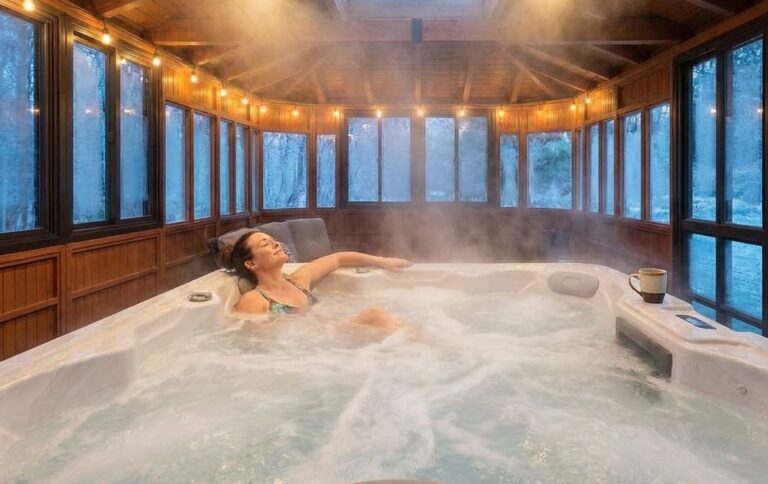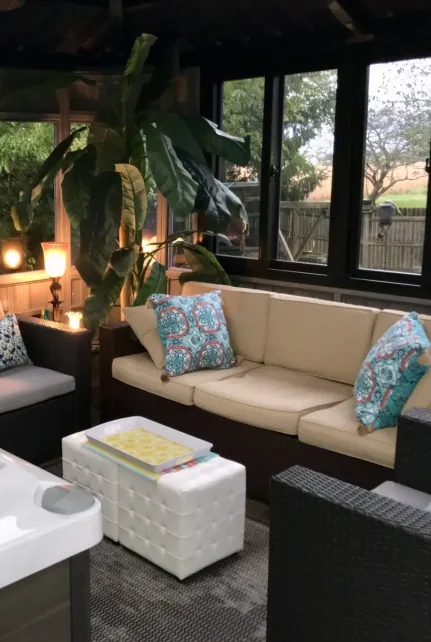
The main hot tub safety risks are slips and falls, unsupervised children, electrical faults, overheating, stored chemicals and, in cold climates, ice on the path and deck. Most of them are cheap to fix: slip-resistant flooring, sturdy steps with a handrail, a locking cover or lockable doors, a GFCI-protected circuit installed by a licensed electrician, and a short soak at a sensible temperature.
This guide goes through each risk in plain terms and explains where an enclosure helps. It is general information, not medical or electrical advice. Check local code and talk to your doctor about your own health.
1. Slips and falls around the tub
Wet surfaces around a hot tub are the most common problem. People step out warm and wet onto a floor that is cold, smooth and often in the dark. Falls can also happen on the way in, since the tub’s edge and the water can both be slippery.
What helps:
- A slip-resistant floor. Textured concrete, pavers with grip, rubber tiles or a textured composite deck all work better than smooth tile or polished stone.
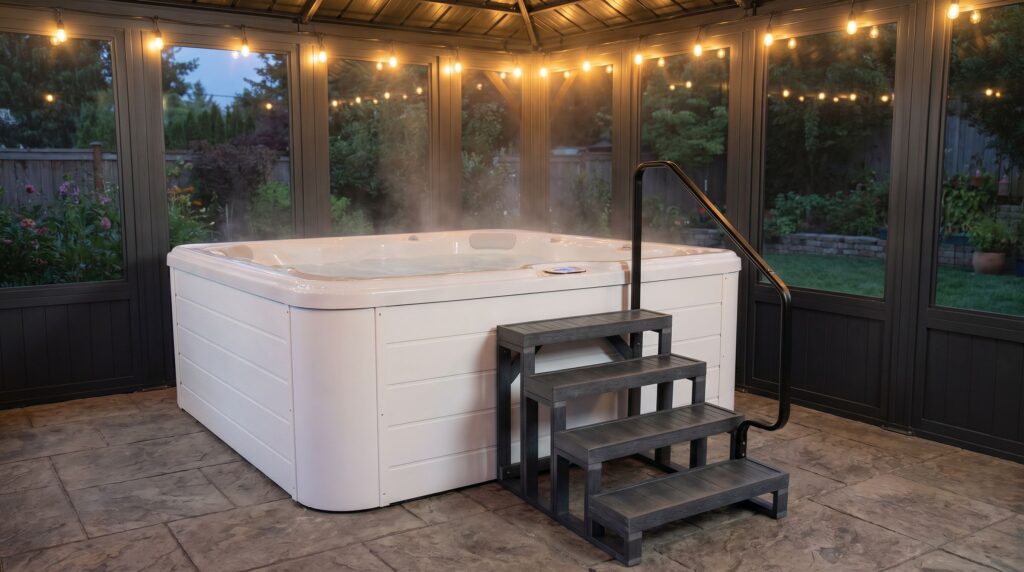
- Sturdy steps. Many tubs come with a thin step that wobbles or sits too high. A wide, stable set of steps makes entry and exit easier on knees and hips. Westview’s spa steps come in 2-, 3- and 4-step versions, matched to different tub heights. The product pages list a 350-pound capacity, and the 4-step model (28 inches at the top) includes a side railing that can be attached on either side.
- Handrails and grab bars. Add one anywhere there is a step-up or deck edge, particularly for older family members.
- Good lighting. Low, warm lights along the path and at the step let you see where your feet are going without a glare.
- Keep the area clear. No hoses, toys, cords or loose mats near the tub.
2. Children and unsupervised access
Hot tubs can be a drowning risk for small children, just as pools are. The U.S. Consumer Product Safety Commission recommends a locking safety cover, and the basic rules are simple:
- An adult should always be nearby when kids are around the tub.
- Keep the cover on and locked whenever the tub is not in use.
- Do not let children play on or around the cover, and keep chairs and toys away from the tub so kids cannot climb onto the edge.
- Ask your pediatrician before letting young children soak at all, since children overheat faster than adults.
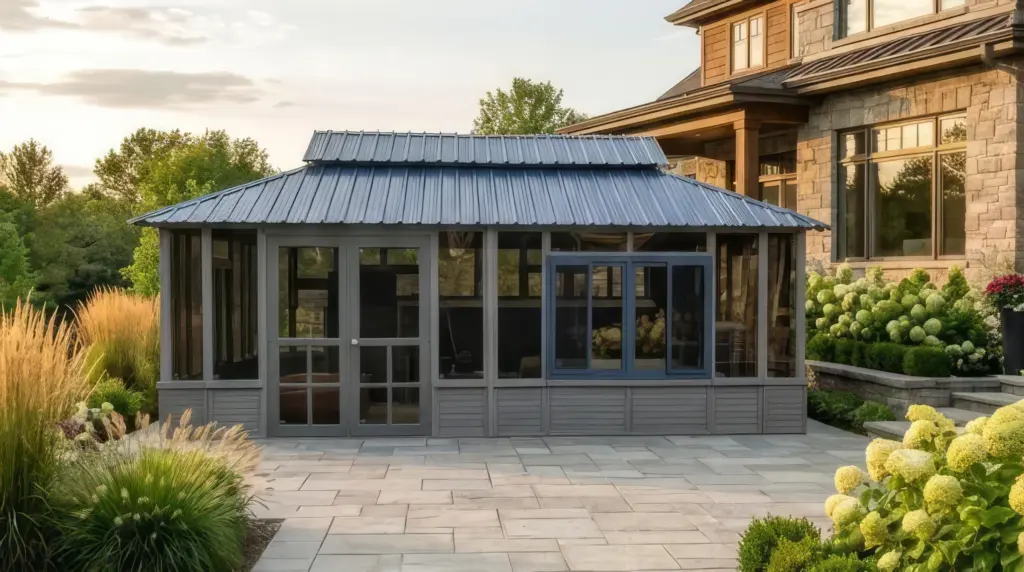
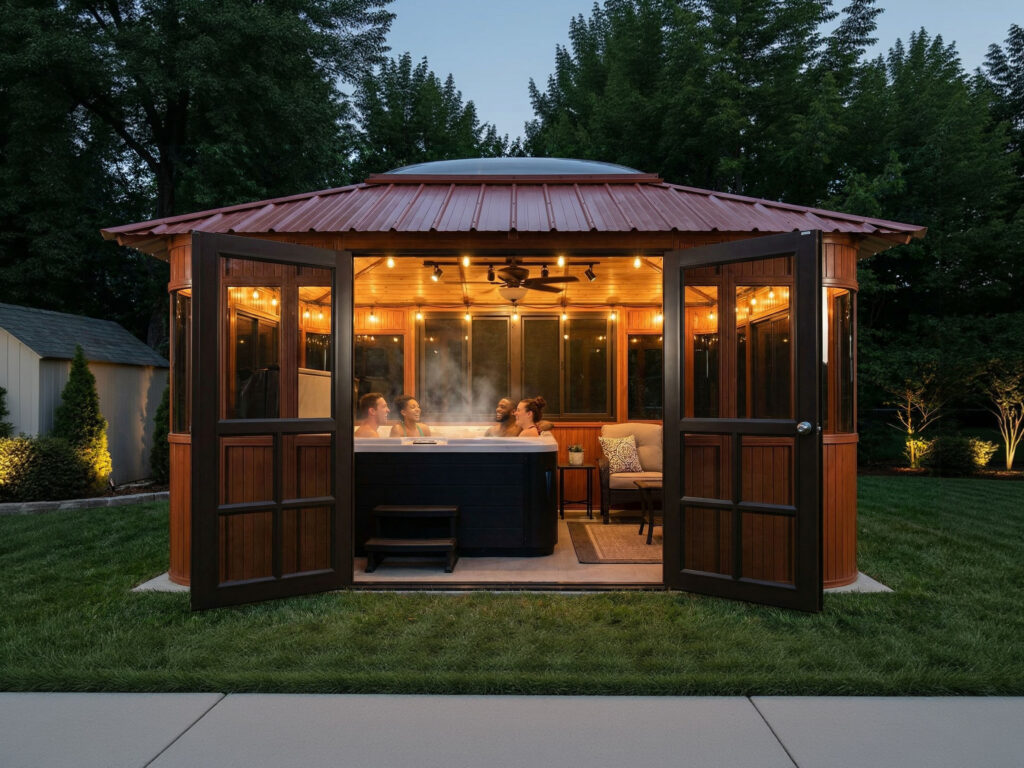
An enclosure is a second layer, not a replacement for a locking cover or supervision. The enclosed Westview models (Aspen, Colorado, Whistler, Brentwood and Denali) have lockable aluminum doors, so the whole tub area can be locked when nobody is home. That does not remove the risk completely: someone still has to keep the key, and the tub should still have its own locking cover. Treat the doors as an added barrier.
3. Electrical safety
Water and electricity do not mix, and a hot tub is a high-current appliance outdoors.
- Hire a licensed electrician. The tub needs its own correctly sized circuit with a GFCI (ground-fault circuit interrupter) and a disconnect, installed to local code.
- Test the GFCI. Press the test button monthly, as the device instructions recommend. If it trips repeatedly, stop using the tub and call a professional.
- No extension cords and no plug-in appliances near the tub. That includes hair dryers, speakers, space heaters and mini-fridges. Use only equipment rated for wet locations, and keep it outside splash range.
- Check lights and outlets. Outdoor-rated, covered fixtures and outlets only. Water getting into a fixture is a common cause of problems.
- Storms and damage. If a cord is exposed or something looks damaged, shut off the breaker and do not touch the tub until it has been checked.
Inside an enclosure, plan the electrical layout early. Run the conduit before the pad or deck is finished, and keep lights, switches and outlets away from the water. A dry, covered space keeps outlets and equipment out of direct rain, but it does not replace GFCI protection.
4. Heat, soaking time and your health
The CPSC recommends that hot tub water temperature never exceed 104 degrees Fahrenheit. Many hot tubs are set to 100 to 102 degrees for everyday use. Beyond temperature, a few common-sense habits matter:
- Keep soaks short. Fifteen to 30 minutes is a common guideline. Get out if you feel dizzy, lightheaded, nauseated or too hot.
- Drink water. Hot water makes you sweat, so have water nearby.
- Skip alcohol and sedating medicines before or during a soak, since they increase the risk of fainting and drowning.
- Check with your doctor if you are pregnant, have heart disease or low blood pressure, are an older adult, or take medicines that affect heart rate or blood pressure.
- Never soak alone if you can avoid it, and never dive in headfirst. Hot tubs are shallow.
- Keep hair away from suction fittings, and make sure drain covers are intact and not removed.
5. Chemicals and water care
Sanitizers, pH adjusters and shock treatments are safe when stored and handled correctly.
- Store chemicals in their original containers, tightly closed, in a cool, dry, ventilated place that children cannot reach.
- Do not store them inside a small closed enclosure with the tub. Humidity and fumes can damage containers and equipment.
- Keep different products apart, and never mix them. Dissolve or add each one as the label directs.
- Wash your hands after handling, and wear gloves and eye protection when measuring.
- Test and balance the water regularly. Clean water is also safer water.
6. Ventilation inside an enclosure
A hot tub releases a lot of warm, humid air. In a closed room that can lead to condensation on the walls and ceiling, a stuffy feeling and slick floors. The solution is airflow. Westview gazebos have natural ventilation points where the roof and wall panels meet, and the enclosed models have aluminum-framed sliding windows (six on the Aspen, Colorado, Whistler and Brentwood models we checked, eight on the Denali 16×24), so you can open them to let steam out and close them to keep the heat in. Keep the windows cracked a little after a soak and wipe down the floor if it gets wet. Our guide to using a hot tub gazebo in winter has more on cold-weather use.
7. Winter ice and cold exposure
Cold weather adds its own hazards:
- Clear and salt, or sand, the path from the house to the tub area before each use. Use a pet-safe, deck-safe de-icer.
- Keep a robe, towel and warm footwear within reach so you are not walking across ice barefoot.
- Do not stay in so long that you get dizzy, and go in warm and dry. The first minute after you get out is when many winter slips happen.
- Keep the cover clear of heavy snow and ice, and do not stand on it.
An enclosure helps here because the floor inside stays dry and free of ice, and you are out of the wind while you change.
How an enclosure reduces risk
- Lockable doors limit access when no adult is around.
- A roof and walls keep rain, snow and ice off the floor and the equipment.
- A dry, defined floor is easier to make slip-resistant.
- Lighting inside the structure lets you see steps and edges at night.
- Sliding windows let you ventilate on demand.
An enclosure is not a substitute for a locking cover, a GFCI or supervision. It is one more layer. For help choosing, see the full list of Westview structures, or call 1-800-895-1972.
Shop Westview: Hot Tub Gazebos & Enclosures · Aluminum Pergolas · Spa Steps · Current Deals