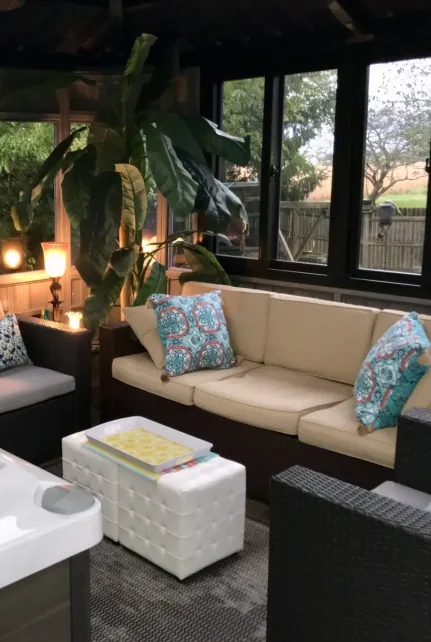

Do you need a permit to build a gazebo in your backyard? Maybe. It depends on your city or county, the size of the structure and whether it attaches to your house. Many places exempt small freestanding backyard structures, but a 12×16 or larger enclosed gazebo often lands on the other side of the line, so a five-minute call to your building department before you order is the safest move.
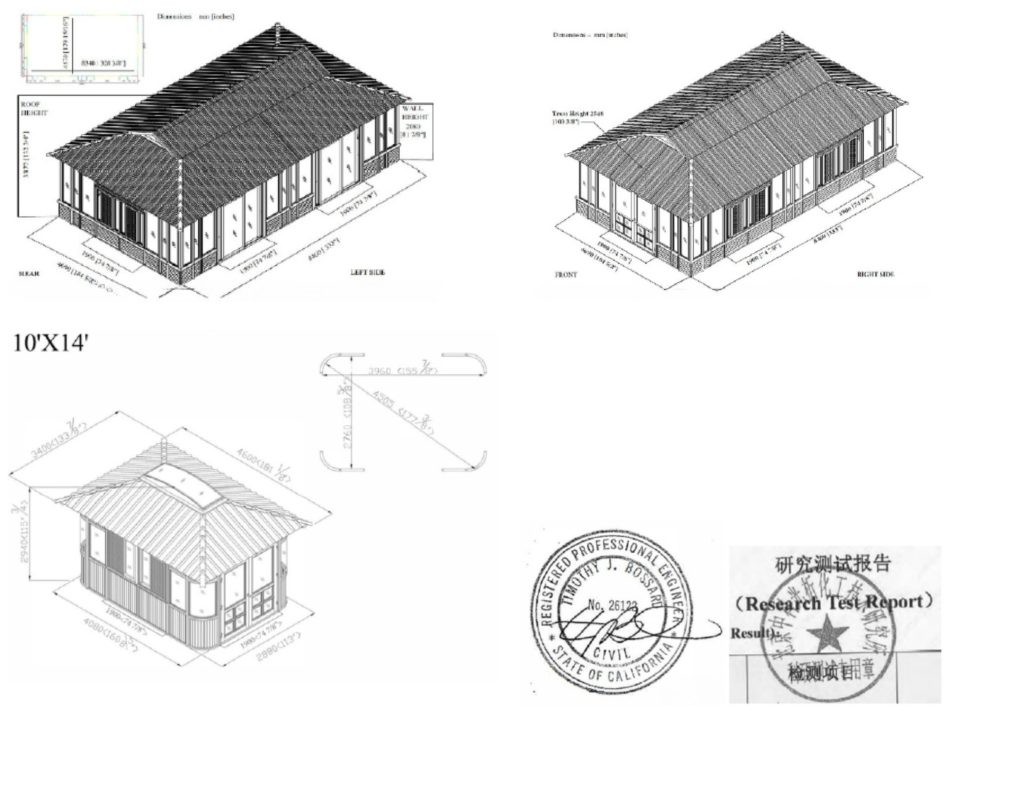
Westview designates its gazebos as temporary structures, and the company can supply engineering documents, component specifications and test reports if your municipality asks for them. That helps, but only your local authority decides whether a permit is required.
The General Rule: Size Triggers the Permit
Most jurisdictions use floor area as the trigger for accessory structures. The cutoff varies. Some cities exempt anything under 100 or 120 square feet; the model residential code exempts one-story detached accessory structures up to 200 square feet, and many local codes set their own lower or higher numbers. Treat the table below as a way to see where your size might fall, not as a rule.
| Nominal size | Approx. floor area | Where it often falls |
|---|---|---|
| 10×10 | 100 sq ft | Often at or under the exemption line |
| 10×14, 12×12, 12×14 | 140 to 168 sq ft | Depends on local threshold (100, 120 or 200) |
| 12×16, 12×18 | 192 to 216 sq ft | Often needs a permit |
| 12×20 and larger (Denali, Brentwood 14×24 to 16×28) | 240+ sq ft | Expect a permit |
The model name is not the exact footprint. For example, the Colorado 12×16 measures about 11.5 by 15.4 feet at the outside walls, with a larger roof. Ask your building office whether they measure walls, roof or floor area, and read the dimensions on the model page for the exact numbers.
Freestanding vs. Attached
A gazebo that sits on its own pad or deck usually gets lighter treatment than one tied into the house. Once you bolt a structure to the house wall, many jurisdictions treat it as an addition, which brings a permit, inspections and sometimes setback changes. Westview says its gazebos can be attached to a house or deck, but additional materials may be needed. If you are leaning that way, read how to attach a gazebo to your house or deck safely first and tell the building department which approach you plan to use.
“Temporary Structure” Does Not Mean “No Permit”
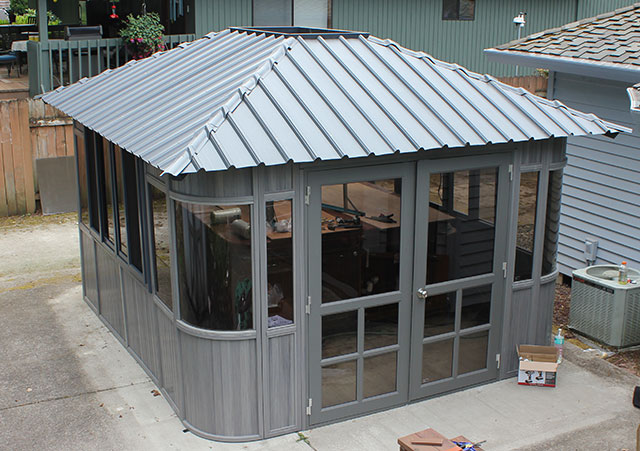
Building codes often draw a line between permanent structures on poured foundations and portable ones that sit on an existing surface. Westview’s gazebos have no permanent foundation and can be disassembled and moved, which is why the company calls them temporary structures. Local officials define the term differently, though. Some look at whether the structure is bolted down, others at its size or how long it will stay. Describe it accurately: a prefab, anchored, freestanding kit on an existing pad or deck.
HOA Rules Are a Separate Hurdle
Even where the city needs nothing, your homeowners association may regulate setbacks from property lines, height, colors, materials and review timelines. Check your covenants first and ask for written approval. Westview’s product pages, photos and spec sheets work well as the package you attach.
Engineering Documents That Support Your Application
Permit offices often want dimensions, materials and structural information. Westview’s engineering page states that its spa gazebo models are designed for a maximum allowable wind load of up to 115 mph and a roof live load of up to 40 pounds per square foot, and that the models were tested per the International Building Code (2006 and 2018 editions) and the Uniform Building Code. Westview can also provide the original engineer-stamped documents for roof and wind load capacities.
Ratings vary by model and by upgrade. The standard wind rating is 75 mph when the gazebo is anchored, and the optional roof bracket kit raises it to 100 to 115 mph depending on size. Standard roof capacity on a Colorado 12×16 is 35 pounds per square foot, rising to 40 with the kit. Each product page lists the rating for that size, so pull the numbers for your exact model and compare them with your local design snow and wind loads.
What to Say When You Call
Keep the call short and specific: “I am planning a prefab, freestanding enclosed gazebo, about 12 by 16 feet, on an existing concrete pad. It is anchored but has no permanent foundation. Do I need a permit, and what setbacks and height limits apply?” Write down the name of the person you spoke with, the date and their answer. If they say a permit is required, ask which documents they want so you can request them from Westview in one go.
A Simple Permit Checklist
- Look up your rules. Search “[your city or county] accessory structure permit” and note the size, height and setback limits.
- Call the building department. Give the exterior dimensions and say it is a freestanding prefab enclosure on an existing pad or deck.
- Ask about the other permits. If you want power or lights inside, electrical work often has its own permit. A hot tub adds its own electrical requirements.
- Gather your documents. Site plan showing setbacks, model and dimensions from the product page, foundation details, and the engineering documents from Westview.
- Get HOA approval in writing if you have one.
- Order after you know. Pre-order and overstock items are not cancellable, so settle the permit question before you buy.
What Happens If You Skip a Required Permit?
Building without a required permit can mean fines, an order to modify or remove the structure, trouble with an insurance claim and questions when you sell. Fees and timelines vary a lot by location, so ask your office what to expect. The cost and delay are usually small compared with the risk.
Plan the Rest Before You Order
Permit questions go hand in hand with the pad. Read the foundation guide, then see the DIY installation guide and the delivery guide so nothing surprises you after checkout. If you are planning a backyard office, the garden office planning guide covers power and permits for that use. For model choices, start with how to choose the right spa gazebo and 10 things to know before buying, then browse all Westview models for exact dimensions. Westview’s team is at 1-800-895-1972 if you need engineering documents for a specific model.
Shop Westview: Hot Tub Gazebos & Enclosures · Aluminum Pergolas · Spa Steps · Current Deals