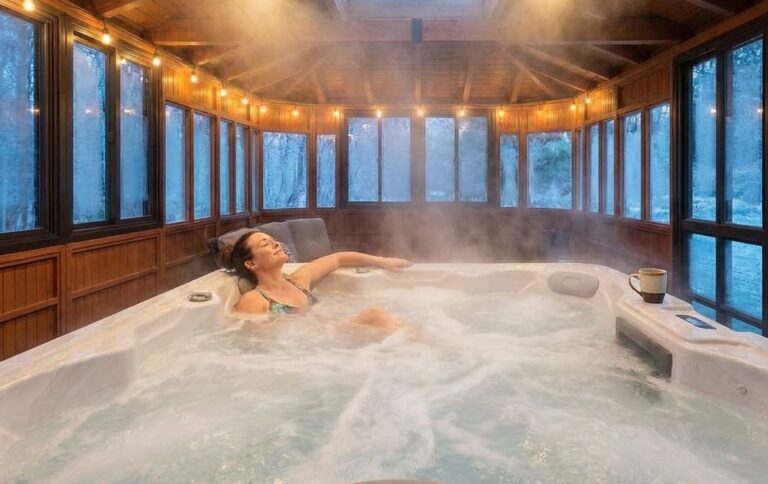
A hot tub enclosure protects your spa, its cover and the people using it from weather, debris and neighbors’ sightlines, and it is the single biggest reason an outdoor hot tub gets used all twelve months instead of three or four. The main benefits are year-round comfort, less heat loss, privacy, a cleaner tub, protection for the equipment, a safer area around the water, and a structure that doubles as an outdoor room.
This guide covers each benefit in practical terms, plus what to look for so you get them. If you are still deciding between an open gazebo and a fully enclosed hot tub gazebo, the end of the post explains how the styles differ.
Year-round use: the benefit everything else supports
Most hot tub owners use the tub heavily for the first few weeks, then less and less when the weather turns. Rain, wind and a walk to the tub in January are the usual reasons. An enclosure with a solid roof and walls changes the trip: you step into a sheltered space, not into the weather, and the water stays comfortable because the wind is not pulling heat off it.
A year round hot tub enclosure typically has a hardtop roof that sheds snow, walls on all sides, and windows or screens you can open or close. In summer you slide the windows open for airflow and bug screens keep insects out. In winter you close everything up and the tub is still usable when it is snowing. For a closer look at cold-weather setups, see our guide to using your spa year round.

Less heat loss and a longer-lasting cover
A hot tub loses most of its heat to the air above and around it, and wind makes that loss worse. Walls and a roof break the wind and keep the air around the tub calmer, so the heater has less to make up. Actual savings depend on your climate, your tub’s insulation and how often you open the cover, so treat any specific number you see online with caution. What you can count on is that a tub in a sheltered space works less hard than one on an open deck.
The cover benefits too. A hot tub cover left in direct sun, rain and heavy snow breaks down faster: vinyl fades, foam takes on moisture and the cover gets heavier and harder to lift. An enclosure keeps most of that weather off the cover, which helps it last longer and stay easier to handle.
Privacy without building a fence
Privacy is the reason many people buy an enclosure, and it is easy to see why. Walls and a roof block views from neighbors, from upstairs windows and from the street. You can use the tub in the evening, with the lights on, without feeling on display. Solid walls give the most privacy; windows add light and views but let people see in, so many owners choose sliding windows they can open or close, or add screens. We cover this in more detail in our post on privacy in a spa gazebo.
Less debris and easier cleaning
An open tub collects whatever the yard sends its way: leaves, pollen, grass clippings, insects, bird droppings and the occasional branch. Every bit of that ends up in the filter or on the water surface. Inside an enclosure, the tub is mostly shielded from falling debris, so the water stays cleaner between changes and the filters need less attention. Screens also keep mosquitoes and flies away when you open the windows in summer.
The structure itself should be easy to look after. Composite panels like Westview’s Ultrawood do not need staining, sealing or painting, so a rinse and a wipe is normally all the upkeep. See our comparison of wood, composite and metal gazebos for how the materials differ over time.
Weather protection for the tub and its equipment
The weather you notice as a user is only part of the story. Rain, snow load, hail, UV and falling branches all act on the shell, the cabinet, the cover and the control panel. A roof takes most of that exposure so the tub does not have to.
Structural ratings matter here, and they vary by model and by upgrade. As an example, the Westview Whistler carries a standard snow load rating of 35 pounds per square foot and a 75 mph wind rating, and its optional bracket upgrade raises those to 40 pounds per square foot and 100 mph. Check the rating on the specific model and size you are considering, and anchor the building as the instructions describe. Our engineering stamp page explains the documentation available if your local building department asks for it.
A safer area around the water
Wet steps, icy decking and dark paths are the everyday hazards around a hot tub. An enclosure helps in a few ways. A roof keeps snow and rain off the floor and steps, so there is less ice to slip on. Lighting inside the building makes night use safer. Lockable doors keep children and pets away from the water when no adult is there. They are an added layer, not a replacement for a locking spa cover, and your local code may have its own requirements.
Two safety points specific to enclosed spaces are worth planning for. First, ventilation: warm, humid air needs somewhere to go, so choose a building with windows or vents you can open. Second, electrical work: the tub’s wiring should be done by a licensed electrician to local code, with the layout planned before the building arrives. Our post on common dangers around the hot tub area walks through more of this.
More than a hot tub shelter: an outdoor room
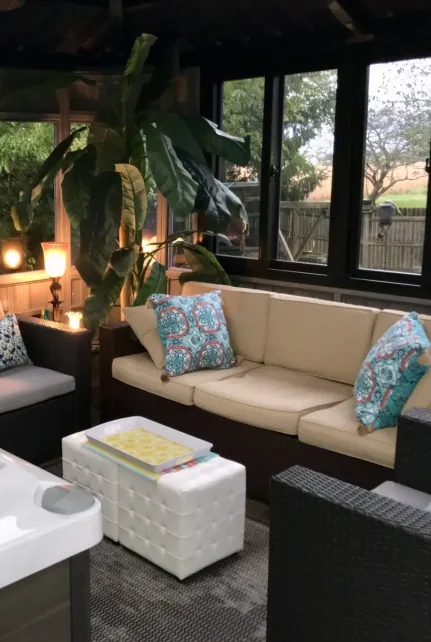
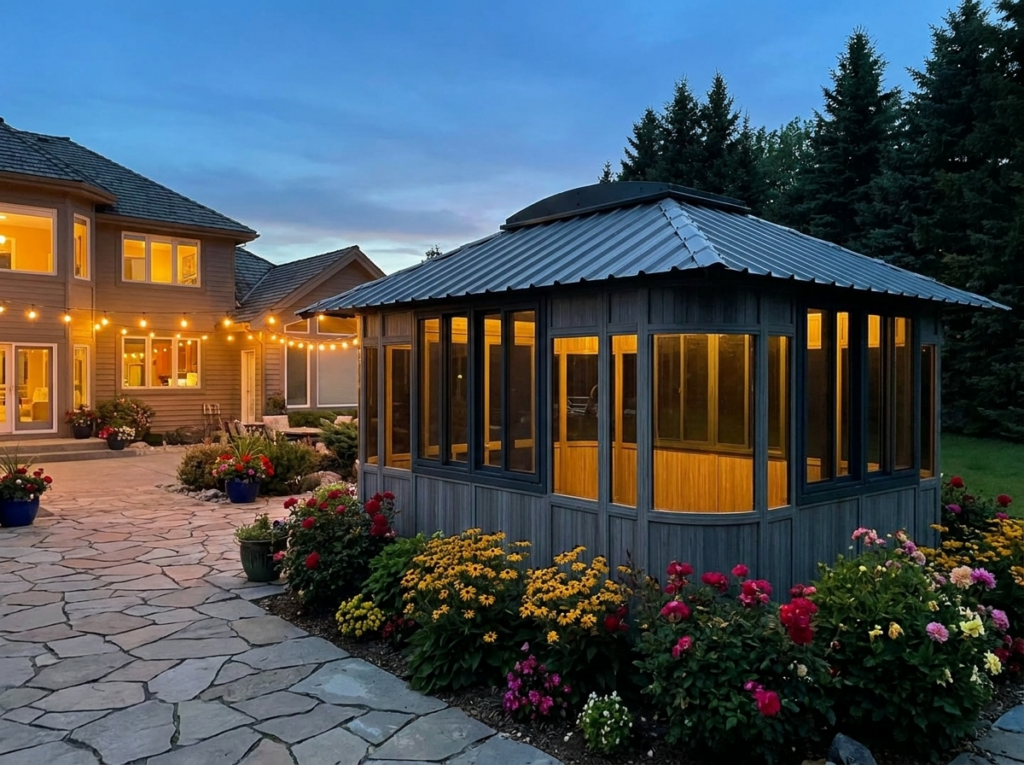
A good enclosed hot tub gazebo is sized for more than the tub. Depending on the model, there is room for spa steps, a bench or sofa, a small table, and even a TV or a bar. Westview’s larger structures are described as furnished outdoor rooms around the spa, and the same buildings are used as backyard studios and garden offices when the tub is not the main event. That versatility is a real part of the value: the space gets used by the whole household, not only during a soak.
If you want to compare styles, the hot tub gazebo collection shows every model with sizes and options, and our post on hot tub enclosures vs pergolas helps if you are weighing an open structure.
Property value: what to realistically expect
A well-built, permanent structure around the hot tub makes the backyard look finished, and buyers tend to respond to outdoor living space that looks intentional and well kept. We would not promise a specific return, since it depends on your market, the quality of the build and how it fits the rest of the property. Think of it as a likely plus for appeal and usability, not a guaranteed return.
Benefits at a glance
| Benefit | What delivers it | What to look for |
|---|---|---|
| Year-round use | Hardtop roof, walls, closable windows | Snow load and wind ratings for your area |
| Heat and energy | Wind block, calmer air around the tub | Tight panel fit, doors that close fully |
| Cover life | Shelter from sun, rain and snow | Roof that overhangs the tub |
| Privacy | Solid walls or sliding windows | Windows that can be opened or closed |
| Cleaner water | Roof and screens keep debris out | Screen kits for summer airflow |
| Safety | Dry floor, lighting, lockable doors | Locks, ventilation and a licensed electrician |
| Living space | Room for steps, seating and a table | A size that fits the tub plus furniture |
What to check before you buy
The benefits above depend on a few decisions, so work through these before choosing:
- Size. Measure the tub, add space for steps and seating, and allow for the door width so the tub can be moved in. Our sizing guide has the numbers.
- Roof. A hardtop sheds snow and keeps the tub dry. It is the main difference between a year-round enclosure and a summer shade structure; see hardtop vs soft-top.
- Material. Composite panels do not rot, warp or need refinishing. Westview lists a lifetime structural warranty and a 10-year finish warranty for composite structures; full terms are on the warranty page.
- Installation. Westview buildings ship pre-assembled in panels, designed for installation without a contractor, though you still need a level, suitable base and, in many places, a permit. See our note on permits.
- Budget. Prices vary by model and size, so look at our hot tub enclosure cost guide for how the numbers break down.
Open gazebo or fully enclosed?
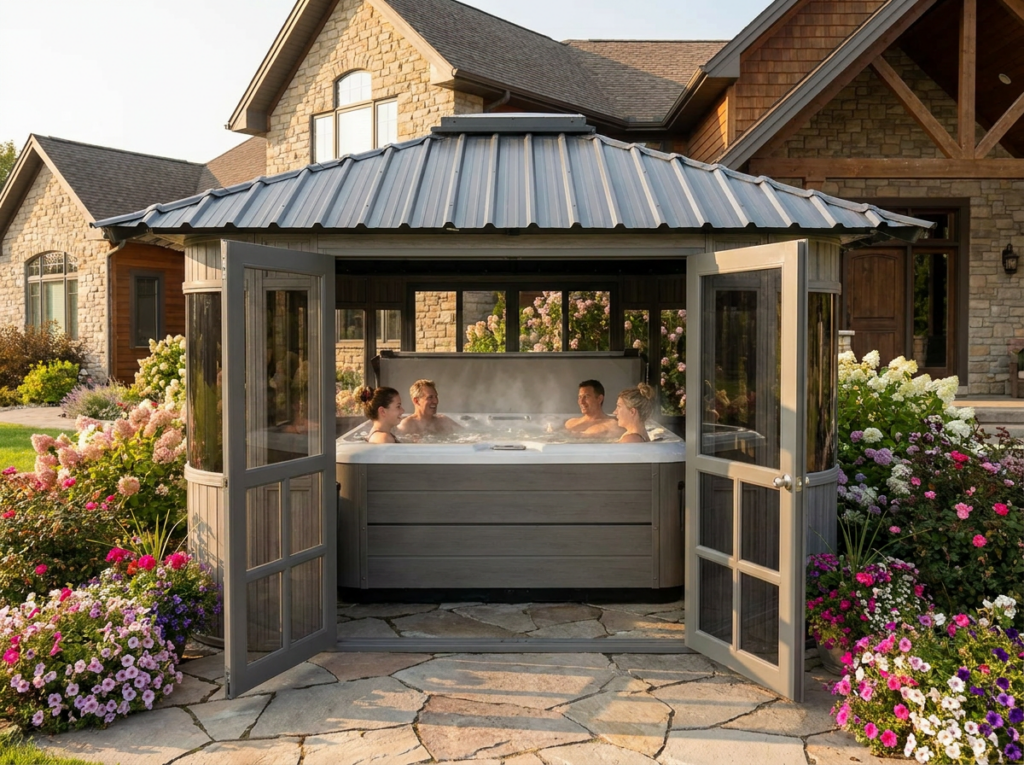
If your main goals are shade, a bit of privacy and good looks in warm months, an open structure such as a pergola can be enough. If you want to use the tub in the cold, keep wind and snow off it, and have a space that feels like a room, an enclosure with a solid roof and windows is the better fit. Many owners start with the second option precisely because it removes the weather as a reason not to use the tub.
Not sure which direction suits your yard? Call Westview at 1-800-895-1972 or use the contact form, and we can help you match a model to your tub and climate.
Shop Westview: Hot Tub Gazebos & Enclosures · Aluminum Pergolas · Spa Steps · Current Deals